
Health & Safety Training
Manual Handling Assessor Training Course
A two-day, in-company course that develops the knowledge and practical skills to carry out manual handling assessments and to assess others' lifting technique.
- 2 days · at your site
- In-company UK-wide
- Certificate of attendance
- Staff who will assess handling
Key facts at a glance
- 2 daysCourse lengthdelivered at your premises
- PracticalIncludesa hands-on assessment session
- Assess othersThe skilljudge and improve handling technique
- MHOR 1992The legal driverManual Handling Operations Regs
The course · Quick answer
What is manual handling assessor training?
Manual handling assessor training develops the knowledge and practical skills to carry out manual handling assessments and to assess how others lift and handle loads. KeyOstas delivers it as a two-day in-company course, including a hands-on assessment session.
- Trains staff to carry out manual handling assessments
- Builds the skill of assessing others' handling technique
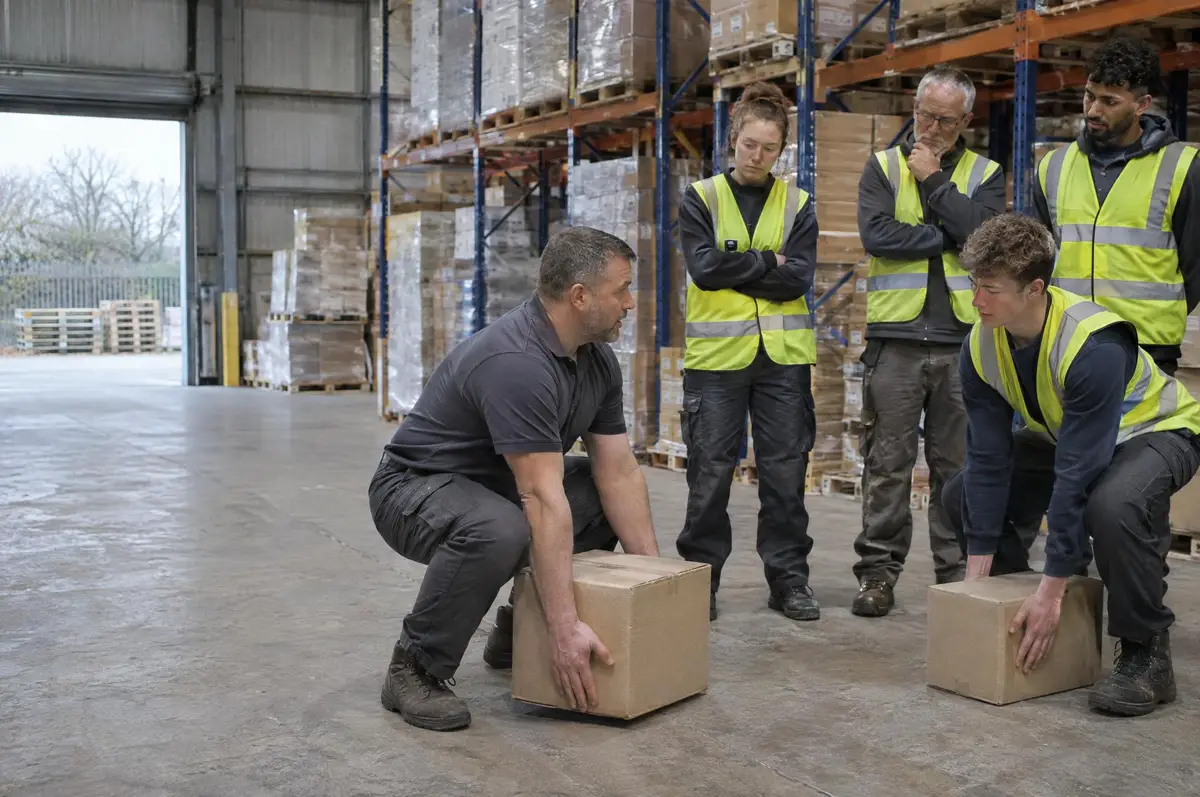
- Includes a practical workplace assessment session
- Certificate of attendance for every delegate
The Manual Handling Operations Regulations 1992 require employers to assess hazardous manual handling tasks and reduce the risk. To do that you need competent assessors. This two-day course develops them. It covers the legal background, the musculoskeletal problems poor handling causes, sound lifting technique and how to assess it, and risk assessment of handling tasks. Delegates carry out practical workplace assessments and leave able to assess both a task and the way a person handles it.
- 2 daysto a competent assessor
- MHOR 1992requires handling tasks to be assessed
- Assess people + taskswhat the course builds
Is it right for you
Is this course right for your team?
It is for the people who will assess manual handling for the organisation.
Right for you if…
- You need staff who can carry out manual handling assessments
- You want handling tasks assessed in-house rather than bought in
- You want assessors who can judge and correct lifting technique
- You are a manager, supervisor or health & safety team member taking this on
- Your work involves a range of handling tasks that need assessing
A different course fits better if…
- Your staff just need a grounding in safe lifting: see Manual Handling Training
- You need in-house manual handling trainers: see Manual Handling Instructor & Assessor
- You want a regulated, accredited qualification: this is a certificate of attendance
After the course
What you will be able to do
By the end of the two days, every delegate will be able to do the following.
Understand the risk
Know the law
Describe the legal requirements for assessing manual handling risks.
Know the scale
Be aware of the scale of manual handling injury across the UK.
Understand the injuries
Explain the musculoskeletal problems poor handling causes.
Know sound technique
Demonstrate sound base movement and recognise good lifting technique.
Assess handling
Conduct a lift
Conduct a basic lift under supervision.
Assess others
Assess others effectively in manual handling and lifting technique.
Assess the task
Carry out risk assessments and manual handling assessments of a task.
Complete a workplace assessment
Carry out a practical workplace assessment and review the findings.
Course content
What the course covers
Two days, building from the law and the body to a practical workplace assessment.
Legal background & the body
- The legal background and the Manual Handling Operations Regulations 1992
- Musculoskeletal problems and how handling causes them
- Sound base movement
Awkward loads & team lifting
- Awkward loads and moving loads from awkward places
- Team lifting and how to assess it
Assessing handling
- Risk assessments and manual handling assessments
- Practical workplace assessments
- Reviewing the assessments, and objectives for the future
Assessment
How the course is assessed and certificated
Practical and applied, with a hands-on assessment session.
Format
Instructor-led, in-company over 2 days
A KeyOstas tutor delivers both days at your premises. It helps to provide typical loads for the practical.
Assessment
Practical assessment exercises
Delegates carry out practical workplace assessments rather than sitting a written exam.
Certificate
Certificate of attendance
Every delegate receives a KeyOstas certificate of attendance on completion.
Delivered in-company, the course uses your own workplace and typical loads, so delegates practise assessing the handling tasks they will really assess.
Choosing a course
Which manual handling course does your team need?
KeyOstas runs three manual handling courses, from a grounding for everyone to a full in-house instructor course. Here is how they differ.
Manual Handling Awareness
Everyone who lifts and carries
- LengthHalf day
- ForAny staff who carry out manual handling
- CoversLifting and handling safely
- OutcomeWork without hurting your back
Manual Handling Assessor
Staff who assess handling tasks
- LengthTwo days
- ForStaff who will assess others' handling
- CoversCarrying out manual handling assessments
- OutcomeAssess and improve handling tasks
Manual Handling Instructor & Assessor
In-house trainers
- LengthThree days
- ForThose who will train and assess others
- CoversInstructing and assessing manual handling
- OutcomeTrain your own people in-house
Train everyone who lifts with the awareness course; train the people who will assess handling tasks as assessors; and train the people who will instruct and assess others in-house as instructors and assessors.
The numbers
Manual handling assessment in context
- MHOR 1992requires hazardous handling tasks to be assessed
- 2 daysto train a competent in-house assessor
- Tasks and peoplean assessor judges both
- 1984KeyOstas has trained UK workforces in health & safety since
Why KeyOstas
Why train with KeyOstas
Practical, in-company health & safety training.
Delivered at your site
Two days at your premises, anywhere in the UK, around your working pattern.
Assess your real tasks
The practical assessment uses your own workplace and typical loads.
Assess people, not just paperwork
Delegates leave able to judge and correct how people actually lift.
Specialists since 1984
Training UK workforces with practical instruction from our own trainers.
Health & safety training
Related courses
Cover manual handling at every level.
Health & safety
Manual Handling Training
The half-day grounding in safe lifting for everyone who handles loads.
View the courseHealth & safety
Manual Handling Instructor & Assessor
The three-day course for training your own in-house manual handling instructors.
View the courseHealth & safety
Risk Assessment Training
The broader workplace risk-assessment skills behind a handling assessment.
View the courseFAQ
Manual handling assessor training: frequently asked questions
What is a manual handling assessor?
A manual handling assessor is someone trained to assess handling tasks and the way people lift: judging the risk, identifying improvements and helping reduce manual handling injury under the Manual Handling Operations Regulations 1992.
How long is the course?
Two days, delivered in-company at your premises.
Who should attend?
Managers, supervisors and health & safety staff who will carry out manual handling assessments for their organisation.
Is there a practical?
Yes. The course includes practical workplace assessments. It helps to provide typical loads so delegates practise on realistic tasks.
What is the difference between this and Manual Handling Training?
Manual Handling Training is a half-day grounding for everyone who lifts. The Assessor course is a two-day course for the people who will assess handling tasks and technique.
Does it qualify me to train others?
No. This course trains assessors. To train and instruct others in manual handling in-house, see the three-day Manual Handling Instructor & Assessor course.
Will the course use our own workplace?
Yes. Delivered in-company, the practical assessments use your own tasks and loads.
Is this an accredited qualification?
It is a KeyOstas course with a certificate of attendance: practical training rather than a regulated qualification.
Cancellation terms for in-company courses
Notice of cancellation is required in writing.
Telephone cancellations will be accepted but be confirmed in writing within seven (7) days. Substitution of delegates will incur no charge.
The amount of the course fee that is still applicable will be determined as standard according to the following rules:
| Cancellation Notice | Fee Payable: | If transferred to later date: |
|---|---|---|
| No Show | FULL | FULL |
| 5 days or less | FULL | FULL |
| 6 to 10 days | 75% | 50% |
| 11 to 15 days | 50% | 25% |
| 16 to 20 days | 25% | 10% |
For NEBOSH and ISEP Courses:
| Cancellation Notice | Registration Fees Payable: | If transferred to later date: |
|---|---|---|
| 30 days or less | FULL | FULL |
N.B. Days = Working Days
Upon receipt of completed Booking Form an Invoice and Course Joining Instructions will be issued.
TERMS: STRICTLY 30 DAYS NET FROM INVOICE DATE (unless otherwise agreed)

Train your manual handling assessors
Tell us how many assessors you would like to train and the handling tasks they will assess, and we will put together a quote for the two-day course.
Request a quoteAll health & safety courses
Last reviewed: May 2026. Checked against current UK health & safety legislation and HSE guidance.