
A Guide to the NEBOSH HSE Certificate in Process Safety Management (UK 2026)
A Guide to the NEBOSH HSE Certificate in Process Safety Management Quick Answer The NEBOSH HSE Certificate in Process Safety Management is a Level 3 qualification developed jointly by NEBOSH and the UK Health and Safety Executive (HSE). It’s a 3-day intensive course aimed at managers, engineers, technicians and safety professionals in high-hazard process industries […]
A Guide to the NEBOSH Certificate in Fire Safety and Risk Management (UK 2026)
A Guide to the NEBOSH Certificate in Fire Safety and Risk Management Quick Answer The NEBOSH Certificate in Fire Safety and Risk Management is a Level 3 qualification (A Level equivalent) for fire safety practitioners, building managers, fire risk assessors and health and safety professionals with fire safety responsibilities. It’s an 11-day course covering fire […]
A Guide to the NEBOSH National Construction Certificate (UK 2026)
A Guide to the NEBOSH National Construction Certificate Quick Answer The NEBOSH National Construction Certificate is a Level 3 qualification (A Level equivalent) for managers, supervisors and safety practitioners working in UK construction. It’s a 10-day course covering construction-specific hazards, the Construction (Design and Management) Regulations 2015 (CDM), and management of safety on site. Two […]
How to Become a Fire Risk Assessor in the UK (2026 Guide)
How to Become a Fire Risk Assessor in the UK (2026 Guide) Quick Answer To become a fire risk assessor in the UK you need: (1) a recognised fire safety qualification — typically the NEBOSH National Certificate in Fire Safety as a starting point, (2) practical experience carrying out assessments under supervision, and (3) registration […]
Working at Height Regulations Explained: UK Employer Guide (2026)
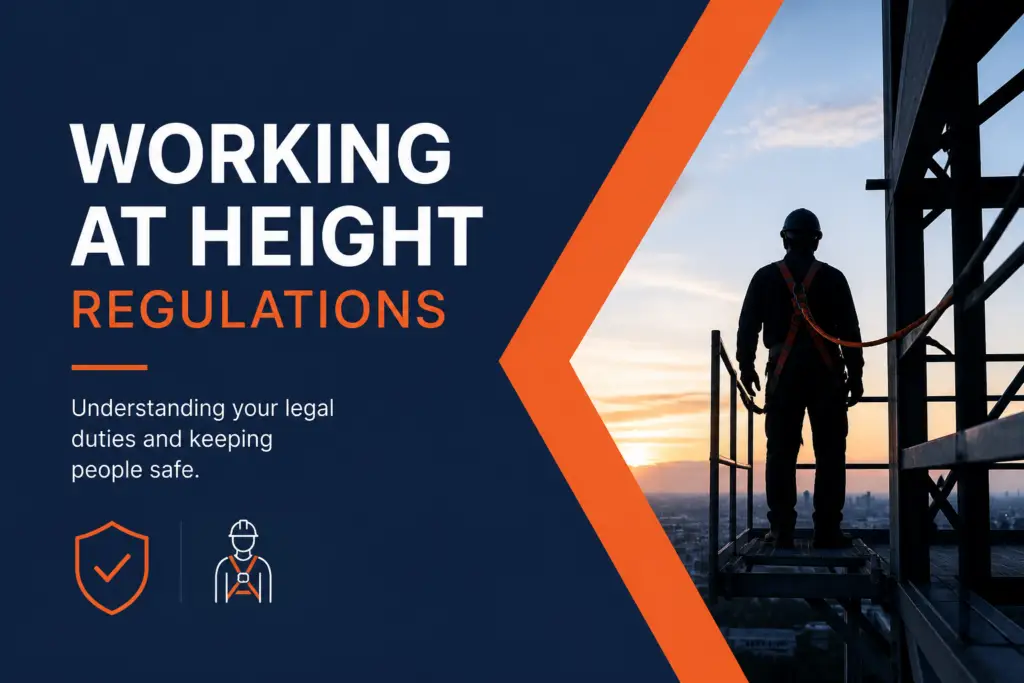
Working at Height Regulations Explained: UK Employer Guide (2026) Quick Answer The Working at Height Regulations 2005 require employers to: (1) avoid working at height where reasonably practicable, (2) where work at height can’t be avoided, prevent falls using the right equipment and a safe system of work, and (3) where falls can’t be prevented, […]
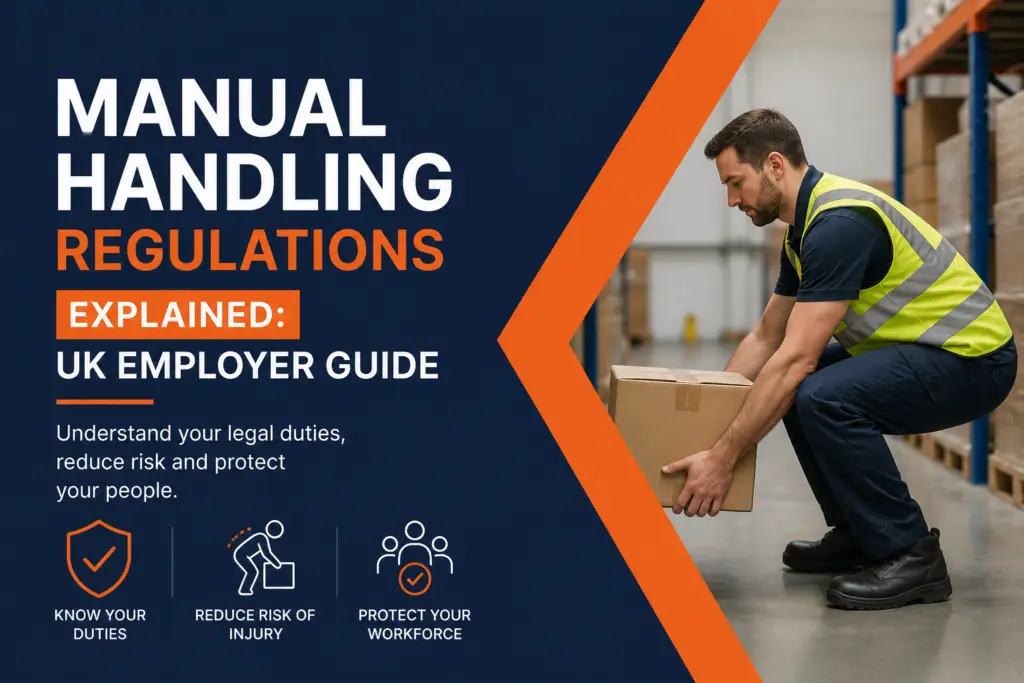
Manual Handling Regulations Explained: UK Employer Guide (2026)

Manual Handling Regulations Explained: UK Employer Guide (2026) Quick Answer The Manual Handling Operations Regulations 1992 (amended 2002) require UK employers to: (1) avoid hazardous manual handling where reasonably practicable, (2) assess any manual handling that can’t be avoided using the TILE framework (Task, Individual, Load, Environment), and (3) reduce the risk of injury to […]
COSHH Regulations Explained: A Practical UK Guide (2026)
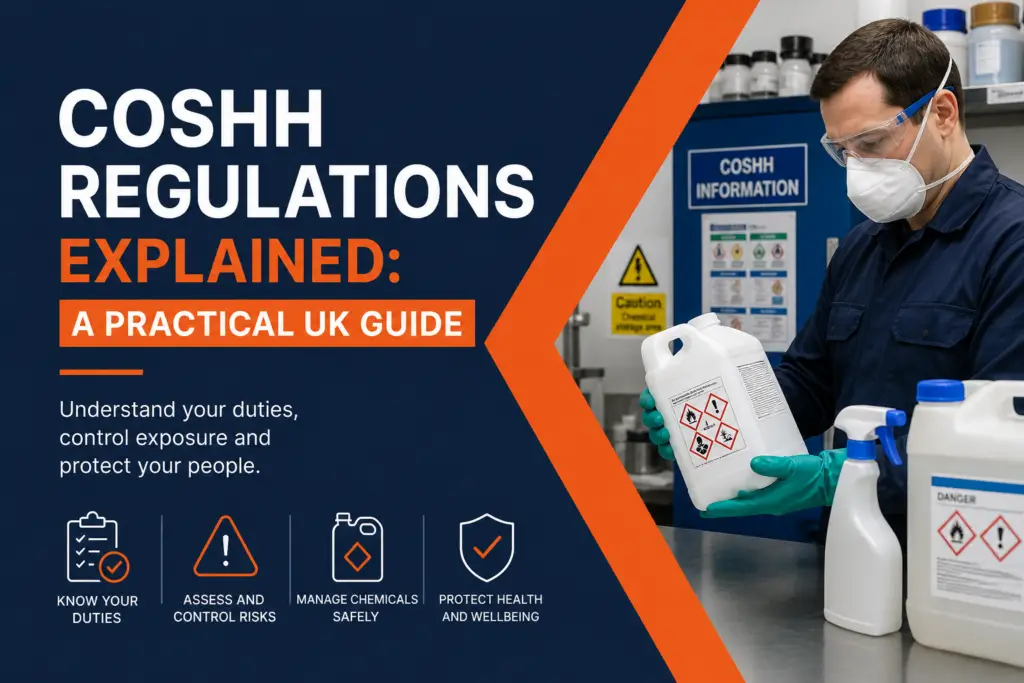
COSHH Regulations Explained: A Practical UK Guide (2026) Quick Answer COSHH stands for the Control of Substances Hazardous to Health Regulations 2002. It’s the UK law that requires employers to assess and control the risks from hazardous substances in the workplace — chemicals, dusts, fumes, gases, and biological agents. Employers must identify hazardous substances, carry […]
The 5 Steps to Risk Assessment: HSE Framework Explained (UK 2026)
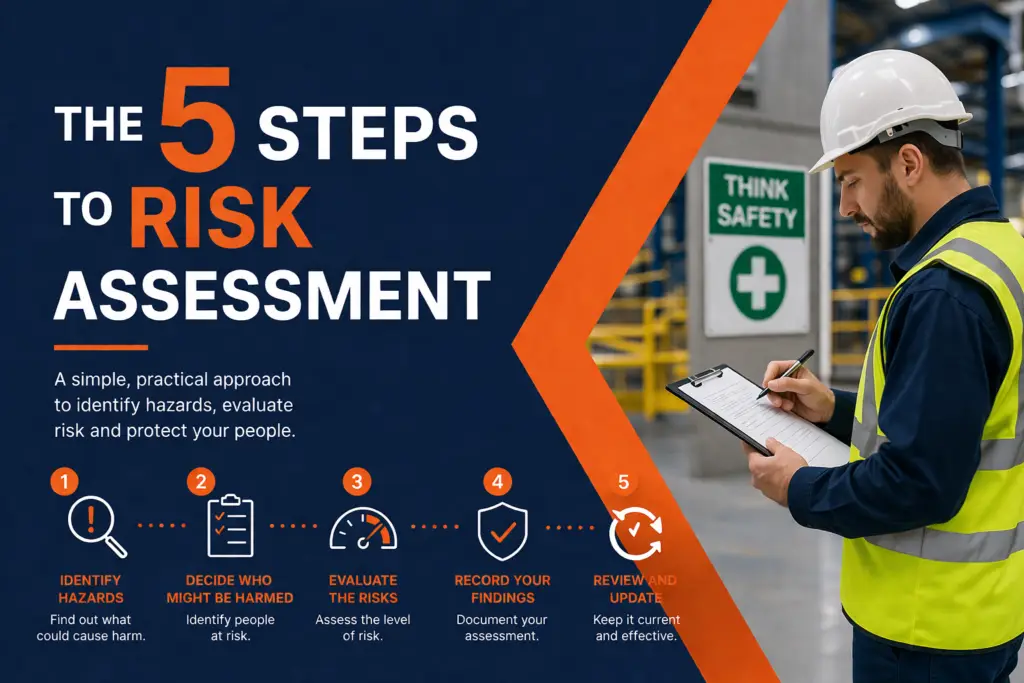
Quick Answer The HSE 5 steps to risk assessment are: (1) identify the hazards; (2) decide who might be harmed and how; (3) evaluate the risks and decide on precautions; (4) record your findings and implement them; (5) review your assessment and update if necessary. This is the UK reference framework, set in HSE guidance […]
Driving for Work Policy: A UK Guide (2026)
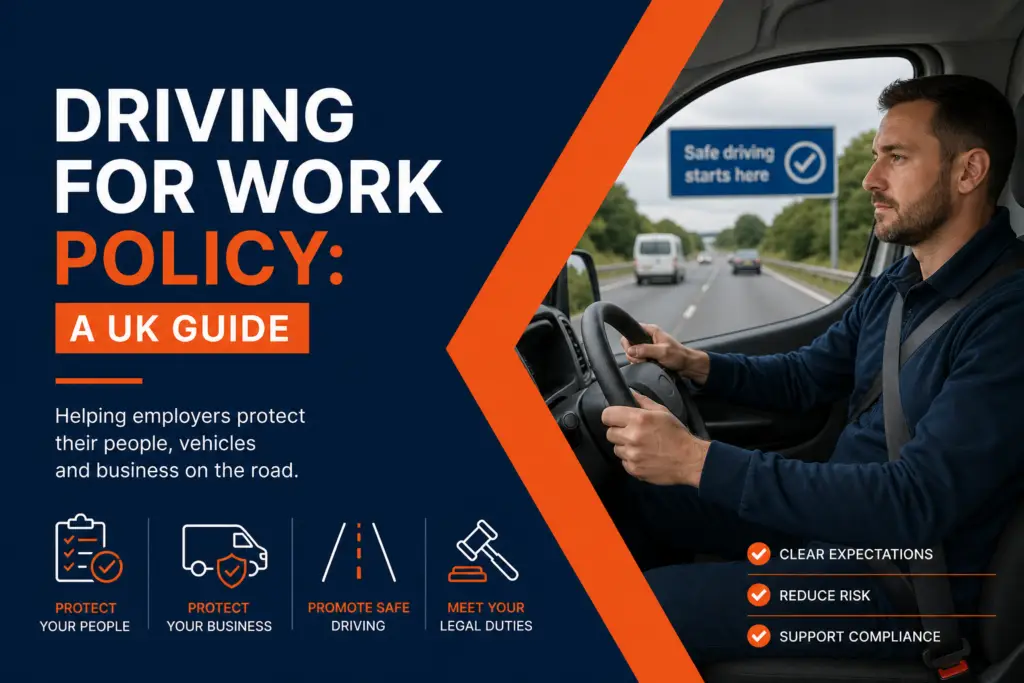
Driving for Work Policy: A UK Guide Quick Answer A driving for work policy is the document that operationalises an employer’s health and safety duties for any worker who drives as part of their job — whether in a company vehicle or their own. UK law treats driving as a work activity governed by the […]
Control of Noise at Work Regulations 2005 Explained
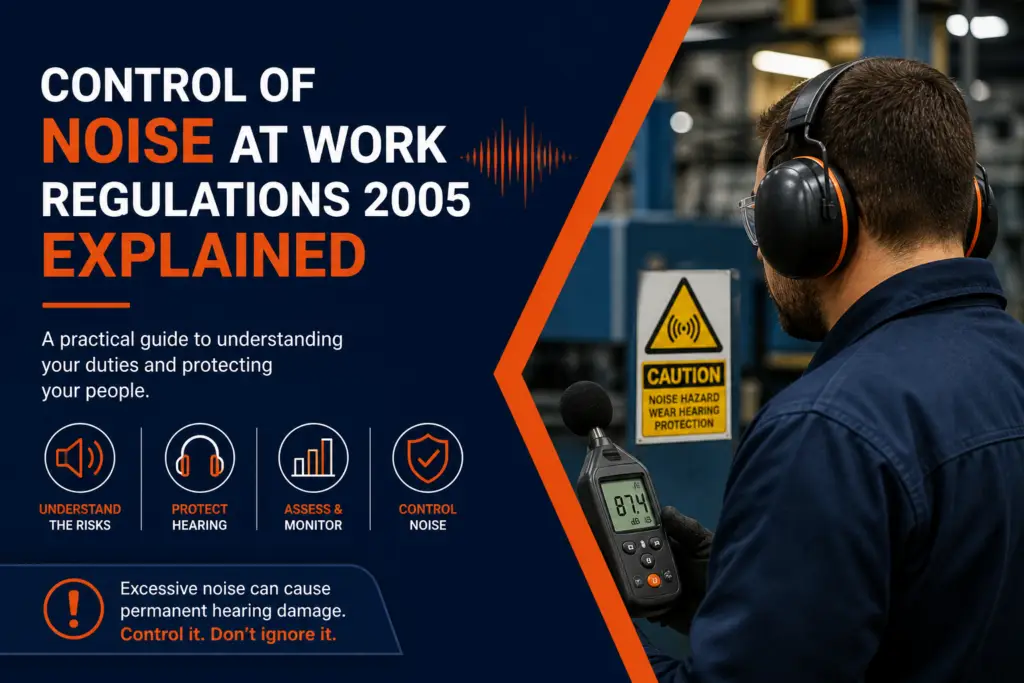
Control of Noise at Work Regulations 2005 Explained Quick Answer The Control of Noise at Work Regulations 2005 protect UK workers from noise-induced hearing loss. They set three trigger levels measured as a daily personal noise exposure averaged over 8 hours: a Lower Exposure Action Value (LEAV) of 80 dB(A), an Upper Exposure Action Value […]
Display Screen Equipment Regulations 1992: UK Guide (2026)
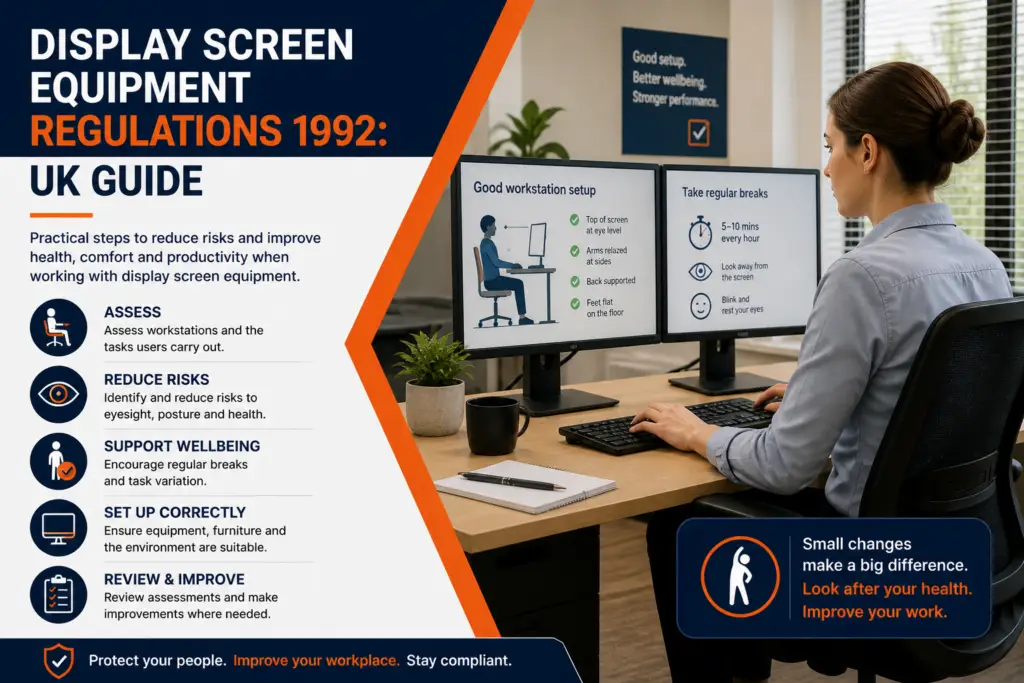
Display Screen Equipment Regulations: A UK Guide for Hybrid Workplaces Quick Answer The Health and Safety (Display Screen Equipment) Regulations 1992 require UK employers to assess workstations, meet specific equipment and environment standards, provide rest breaks or task variation, fund eye tests on request, and provide health and safety information and training. The duties apply […]
Confined Space Regulations 1997: A UK Guide (2026)
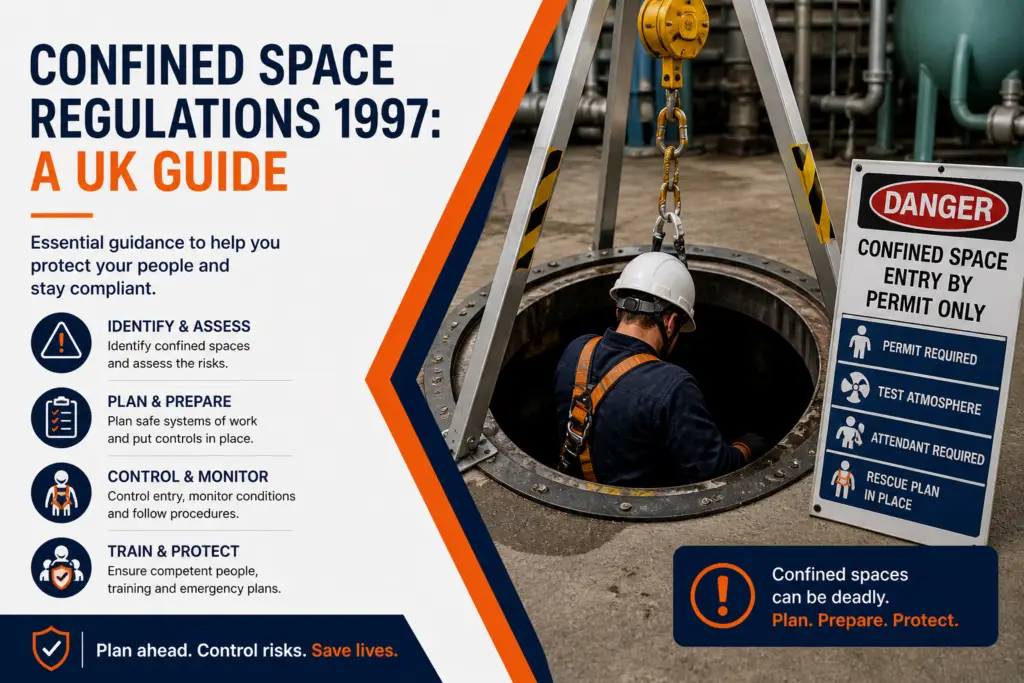
Confined Space Regulations: A UK Guide Quick Answer The Confined Spaces Regulations 1997 apply to almost every workplace in Great Britain. They define a confined space using a two-part test (substantially enclosed AND a reasonably foreseeable specified risk) and list five specified risks: fire or explosion; loss of consciousness from gases, fumes, vapours or oxygen […]
Permit to Work Systems: A UK Guide (2026)
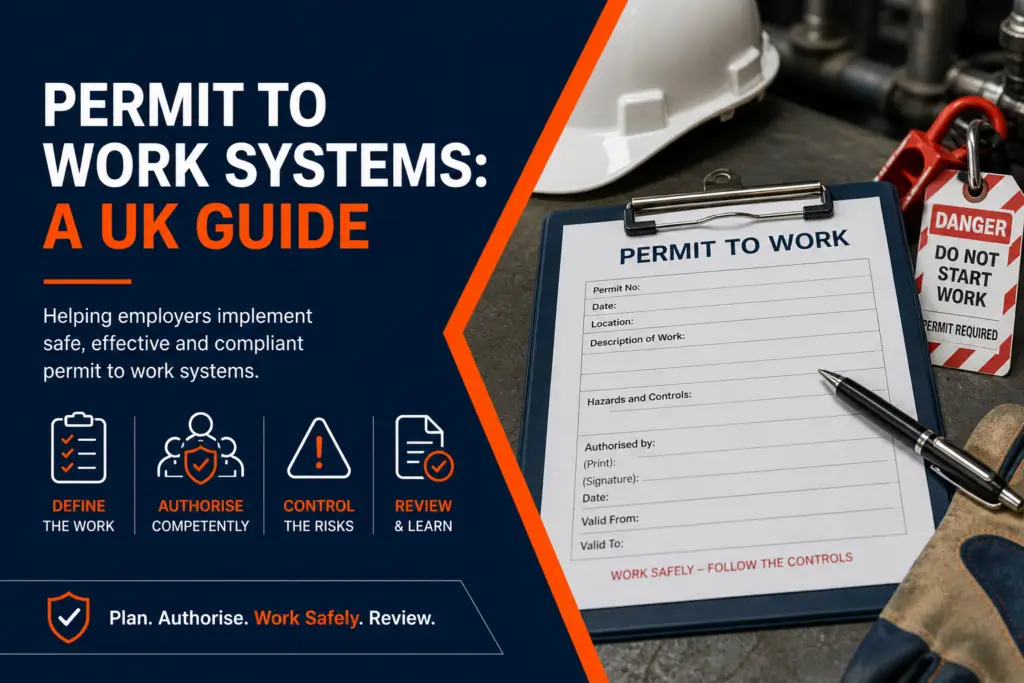
Permit to Work Systems: A UK Guide Quick Answer A permit to work is a formal written authorisation that controls specified high-risk activities — hot work, confined space entry, work on live electrical systems, work at height in unusual circumstances, excavations, and isolations. UK law does not name a single ‘Permit to Work Regulation’, but […]
Mental Health at Work: An Employer’s Guide (UK 2026)
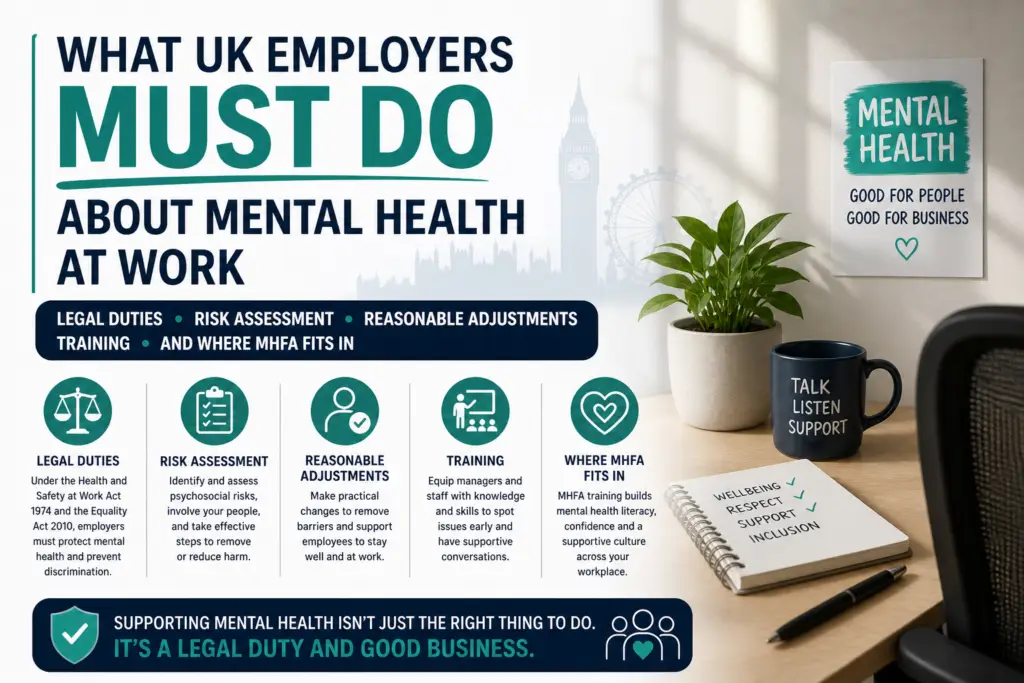
Mental Health at Work: A UK Employer’s Guide to Legal Duties (2026) Quick Answer UK employers have legal duties to protect the mental health of their workers under the Health and Safety at Work Act 1974, the Management of Health and Safety at Work Regulations 1999 and the Equality Act 2010. The core duties are: […]
The Control of Asbestos Regulations 2012 Explained: UK Guide (2026)
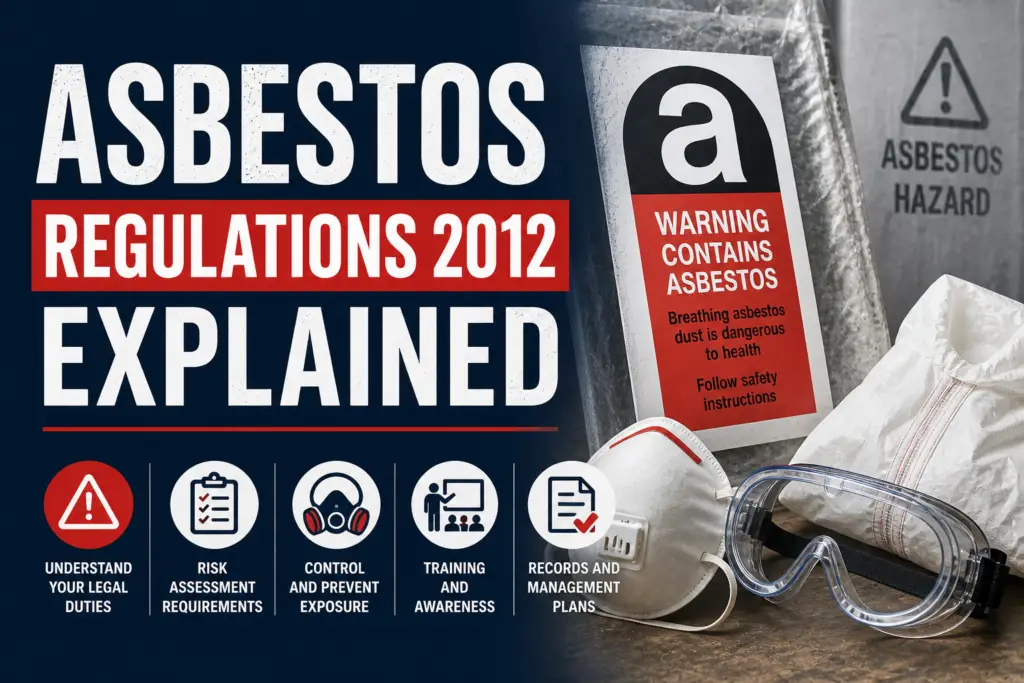
Asbestos Regulations 2012 Explained: A UK Duty Holder Guide (2026) Quick Answer The Control of Asbestos Regulations 2012 (CAR 2012) govern the management of asbestos in UK workplaces. They place a “duty to manage” on anyone responsible for the maintenance or repair of non-domestic premises — typically the building owner, employer or landlord. Asbestos cannot […]
PPE Regulations Explained: A Practical UK Guide (2026)
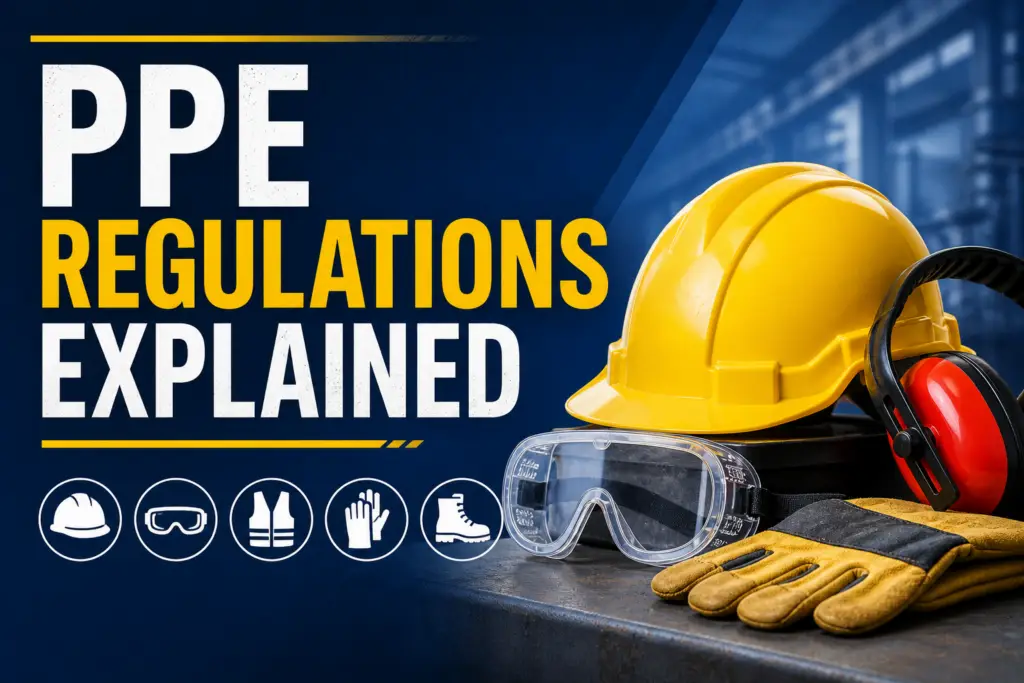
PPE Regulations Explained: A UK Employer Guide (2026) Quick Answer UK personal protective equipment is governed by the Personal Protective Equipment at Work Regulations 1992 (as amended in 2022). Employers must provide suitable PPE free of charge to workers exposed to risks that cannot be controlled by other means. PPE is the last line of […]
Toolbox Talks: A UK Supervisor Guide (2026)
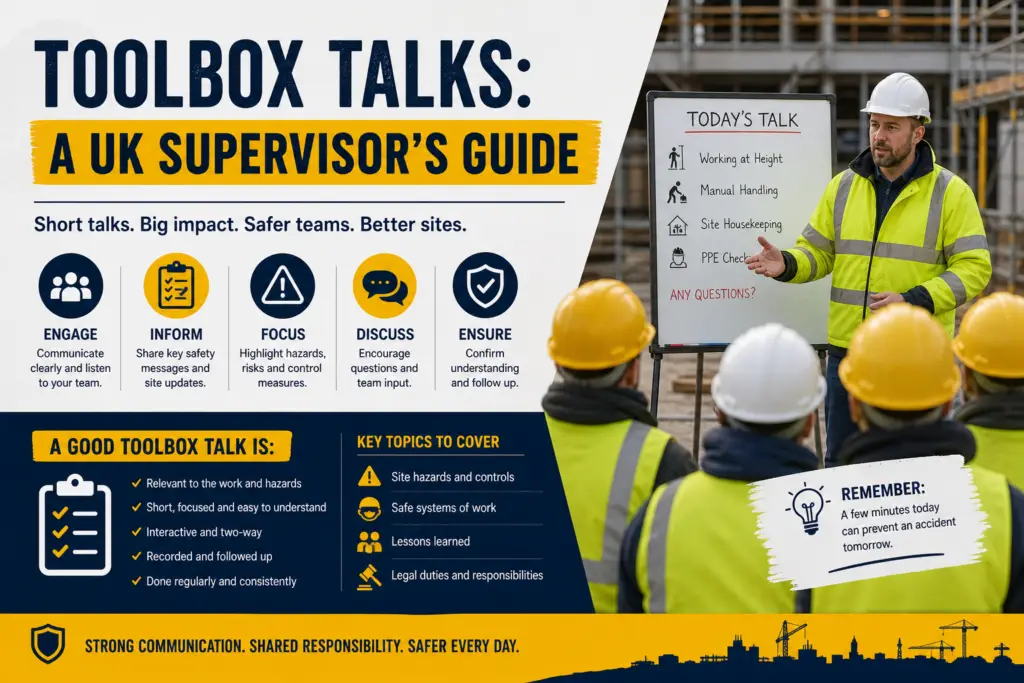
Toolbox Talks: A UK Supervisor’s Guide (2026) Quick Answer A toolbox talk is a short (5-15 minute) safety briefing delivered by a supervisor or foreman to their team — typically at the start of a shift or before a specific task. The aim is to reinforce safety knowledge in a focused, practical way directly relevant […]
Lone Worker Policy and Risk Assessment: UK Guide (2026)
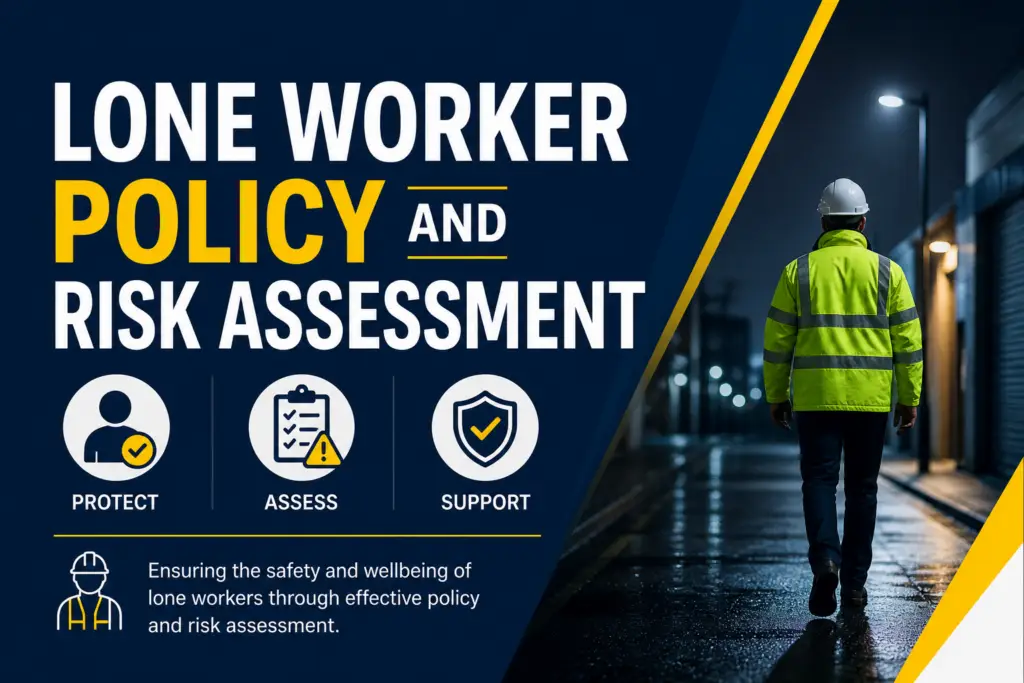
Lone Worker Policy and Risk Assessment: UK Employer Guide (2026) Quick Answer UK employers have a legal duty under the Health and Safety at Work etc. Act 1974 and the Management of Health and Safety at Work Regulations 1999 to assess the risks to lone workers and put in place suitable controls. A lone worker […]
What Is a Method Statement? (UK 2026 Guide with Template)
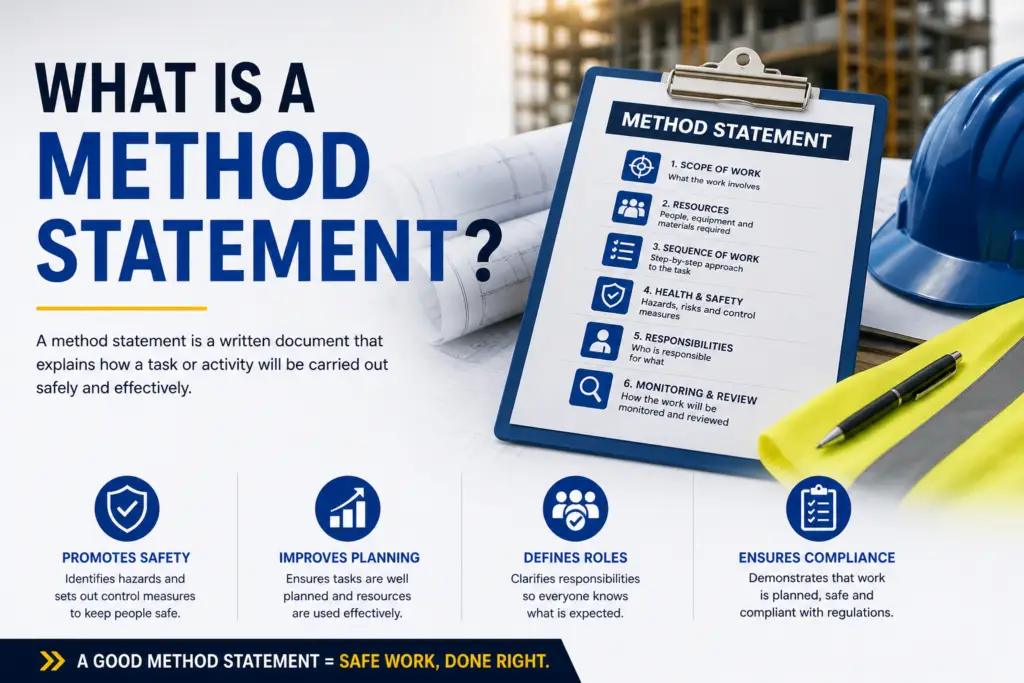
What is a Method Statement? A UK Guide for Contractors (2026) Quick Answer A method statement is a written document that describes step-by-step how a specific task will be carried out safely. It works alongside a risk assessment — the risk assessment identifies the hazards and the controls; the method statement explains exactly how those […]
Fire Marshal Duties: A Practical UK Guide (2026)
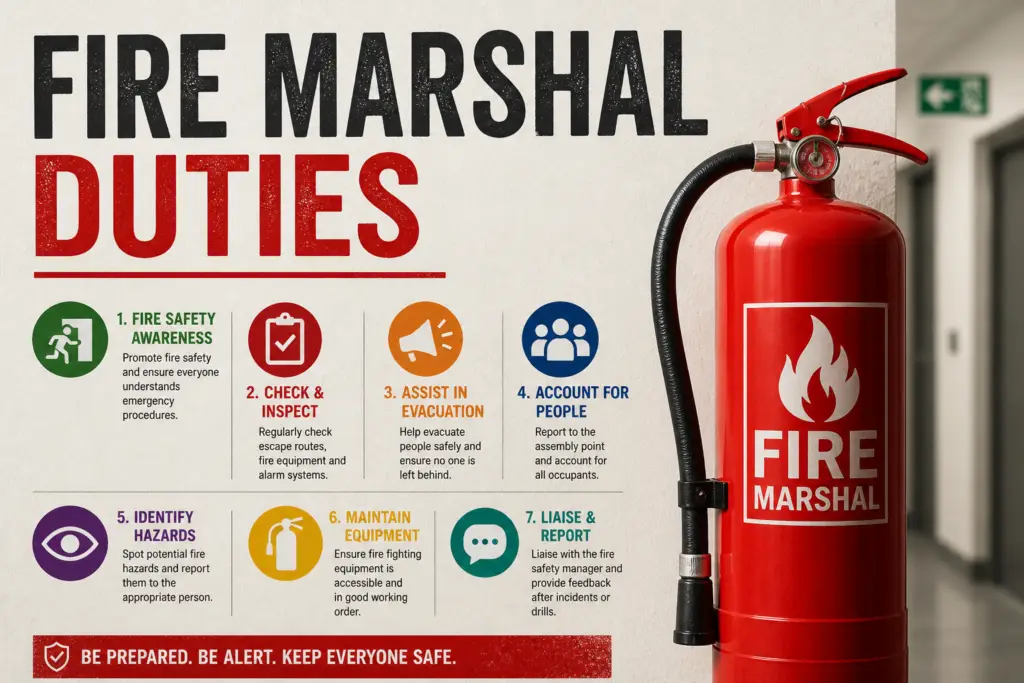
Fire Marshal Duties: A UK Employer’s Guide (2026) Quick Answer A fire marshal (also called a fire warden) is a competent person appointed by an employer under the Regulatory Reform (Fire Safety) Order 2005 to assist with day-to-day fire safety. Core duties include: helping to ensure escape routes are kept clear, raising the alarm if […]
The Regulatory Reform (Fire Safety) Order 2005 Explained: UK 2026 Guide
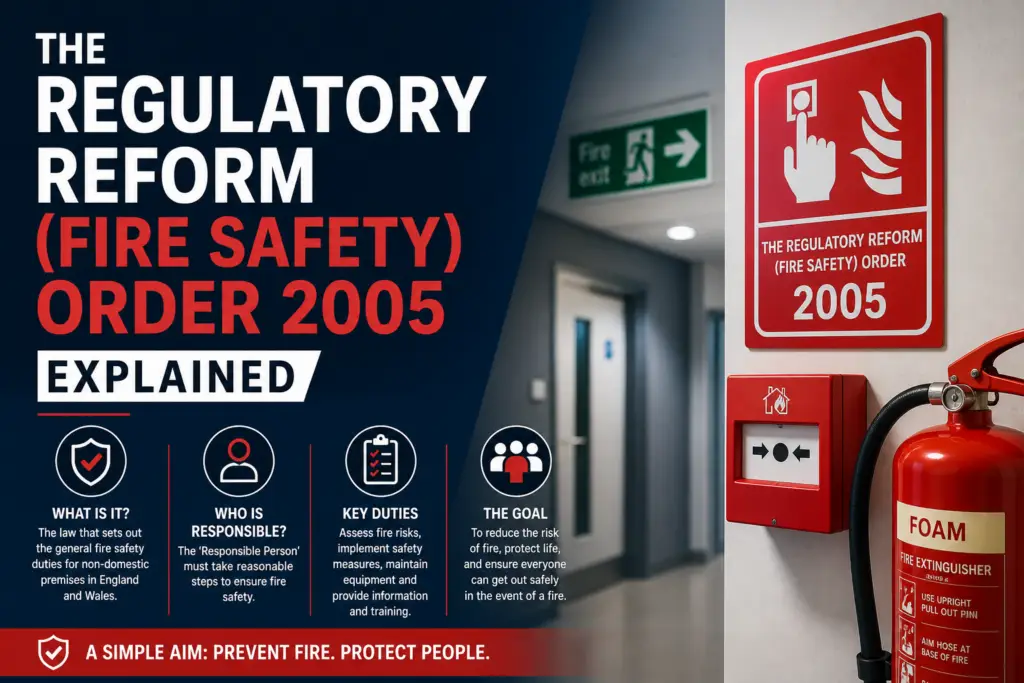
The Regulatory Reform (Fire Safety) Order 2005 Explained: UK Guide (2026) Quick Answer The Regulatory Reform (Fire Safety) Order 2005 (often called the Fire Safety Order or RRFSO) is the main UK fire safety law for non-domestic premises in England and Wales. It places legal duties on the “Responsible Person” — typically the employer, occupier […]
CDM Regulations Explained: A Practical UK Construction Guide (2026)

CDM Regulations 2015 Explained: A UK Construction Guide (2026) Quick Answer The Construction (Design and Management) Regulations 2015 — known as CDM 2015 — set out legal duties for managing health, safety and welfare on UK construction projects. They apply to all construction work, from a single tradesperson fitting a kitchen to a multi-million-pound infrastructure […]
RIDDOR Reporting Explained: A Practical UK Guide (2026)
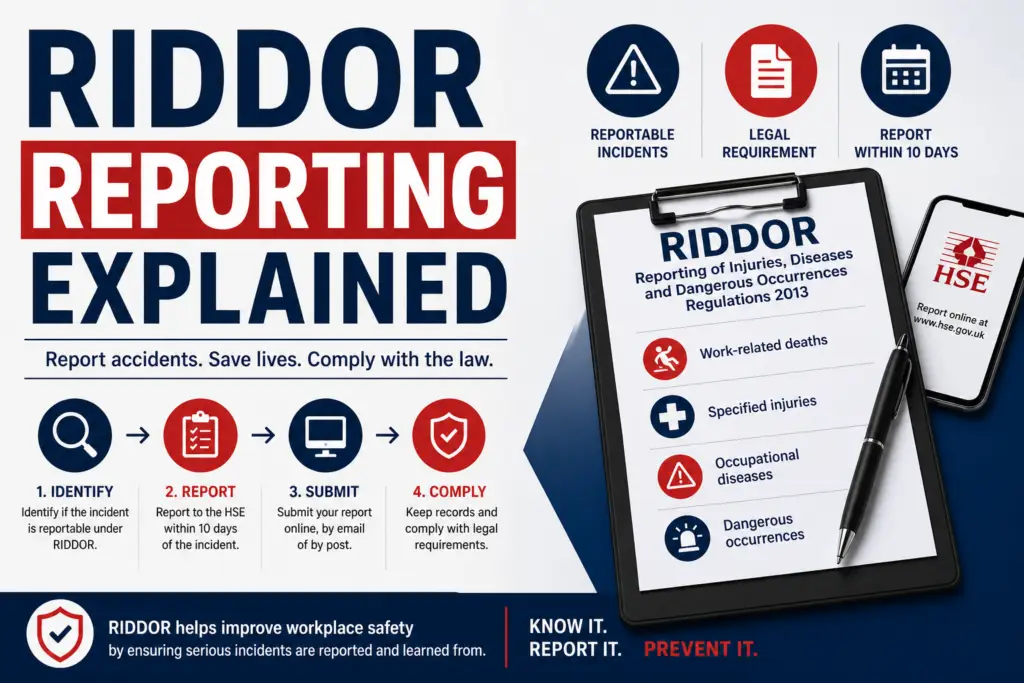
RIDDOR Reporting Explained: A Practical UK Guide (2026) Quick Answer RIDDOR is the Reporting of Injuries, Diseases and Dangerous Occurrences Regulations 2013. It requires UK employers and self-employed people to report certain workplace injuries, occupational diseases and dangerous occurrences to the Health and Safety Executive (HSE). Fatal injuries and specified injuries to workers must be […]
CSCS Card and Health & Safety Qualifications: What You Actually Need (UK 2026)
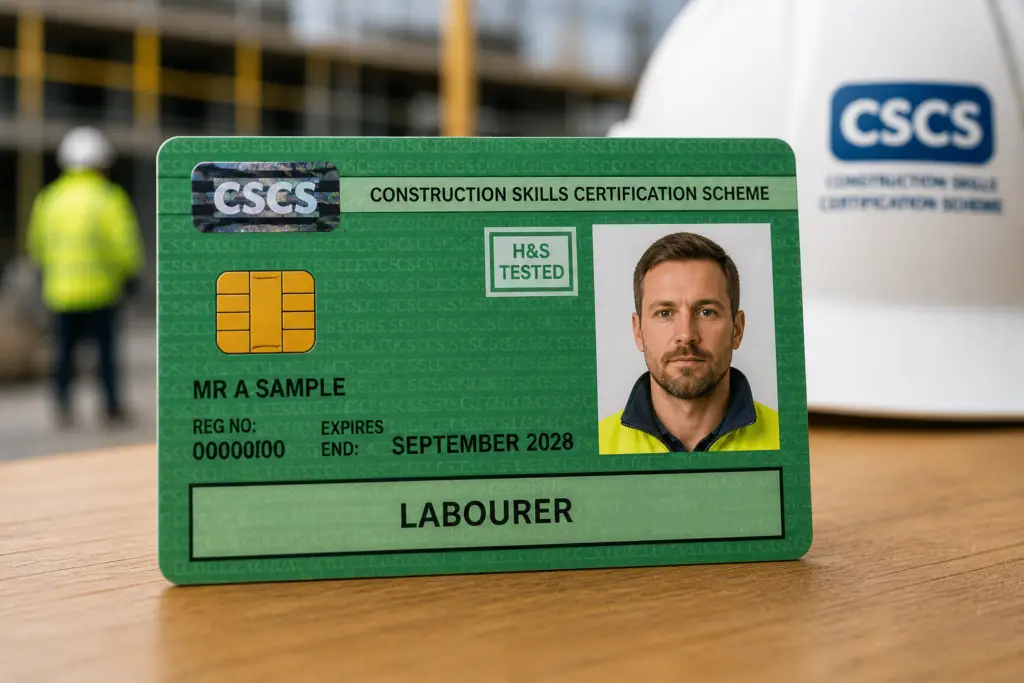
CSCS Card and Health & Safety Qualifications: What You Actually Need (UK 2026) Quick Answer To get a CSCS card you need to pass the CITB Health, Safety and Environment (HS&E) Test, plus hold an appropriate occupational qualification for your trade or role. The CSCS card itself is not a health and safety qualification — […]
Is the NEBOSH Diploma Worth It? An Honest Assessment (UK 2026)

Is the NEBOSH Diploma Worth It? An Honest Assessment (UK 2026) Quick Answer The NEBOSH National Diploma is worth it for people committed to a senior career in health and safety — typically Health and Safety Manager, HSEQ Manager or Head of Safety roles. It pays back through salary uplift (typical £15,000–£25,000 jump), eligibility for […]
How to Become a Health and Safety Officer in the UK (2026 Guide)

How to Become a Health and Safety Officer in the UK (2026 Guide) Quick Answer To become a health and safety officer in the UK, most employers expect you to hold the NEBOSH National General Certificate as a minimum. The qualification takes around 80–120 hours of study and has no formal entry requirements. Entry-level roles […]
What is the NEBOSH General Certificate? A Plain-English Guide (UK 2026)

What is the NEBOSH General Certificate? A Plain-English Guide (UK 2026) Quick Answer The NEBOSH General Certificate is a Level 3 vocational qualification in occupational health and safety, awarded by NEBOSH in the UK. It’s equivalent to an A Level in academic terms, takes around 80–120 hours of study, and is assessed through an open-book […]
What is NEBOSH? A Complete UK Guide (2026)

What is NEBOSH? A Complete UK Guide (2026) Quick Answer NEBOSH stands for the National Examination Board in Occupational Safety and Health. It’s a UK-based awarding body, founded in 1979, that designs and assesses health and safety qualifications. NEBOSH doesn’t deliver training itself — it accredits Learning Partners who do. NEBOSH qualifications are recognised in […]
NEBOSH Closing Interview: What to Expect and How to Prepare

NEBOSH Closing Interview: What to Expect and How to Prepare Quick Answer The NEBOSH closing interview is a short video call — typically 15 to 20 minutes — that you take after submitting your NG1 open book exam. A NEBOSH-appointed examiner asks you to explain a few of your answers in your own words. It’s […]
How to Pass the NEBOSH NG1 Open Book Exam (UK 2026)

How to Pass the NEBOSH NG1 Open Book Exam (UK 2026) Quick Answer The NEBOSH NG1 open book exam is a 24-hour scenario-based assessment you complete from home or work. You’re given a workplace scenario and around 11 questions, and you have 24 hours to write your answers using any reference materials you choose. The […]
How to Make the Most of Your Virtual Course with Our Learning From Home Tips

How to Make the Most of Your Virtual Course with Our Learning From Home Tips Our virtual courses are a great way to save commuting time and work around your busy schedule. However, we understand that learning from home can present different challenges, such as distractions, technical issues, and […]