
Fire Safety Training
Fire Warden & Fire Marshal Training Course
Train your nominated fire wardens and fire marshals to lead a safe evacuation, support your fire risk assessment and use an extinguisher with confidence, as a full day with practical or a half-day refresher.
- Full day or ½ day
- In-company UK-wide
- Certificate of attendance
- Nominated wardens / marshals
- Up to 12 delegates
Key facts at a glance
- 1 dayFull coursewith extinguisher practical
- ½ dayRefresher / awarenesstheory, no live practical
- Warden = MarshalOne roletwo names for the same job
- In-companyDelivered UK-wideat your premises
Two ways to run it
Full day or half-day refresher: the difference
Both options train the same role and cover the same theory and law. The full day adds a hands-on extinguisher exercise; the half day is ideal as a refresher, or where live extinguisher practice is not needed.
Full day
Fire Warden & Marshal: full course
1 day includes extinguisher practical
- The full warden / marshal syllabus
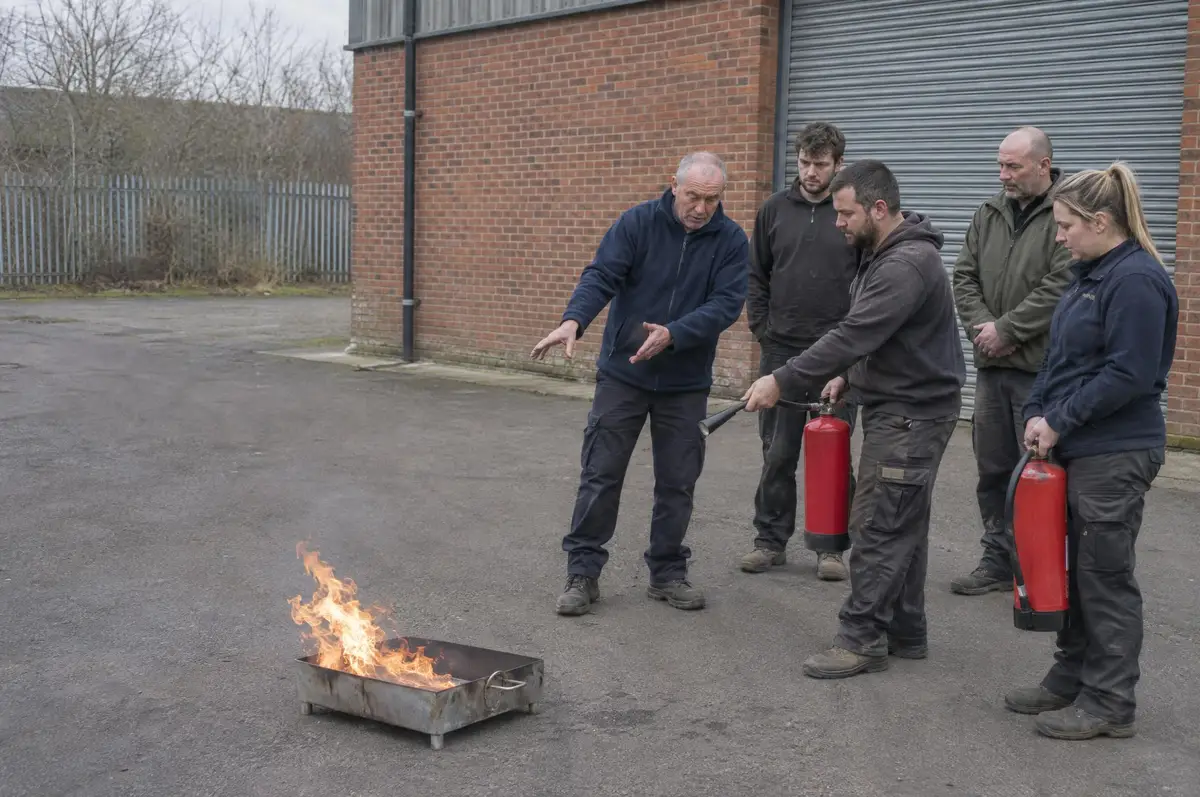
- A practical exercise where every delegate discharges an extinguisher
- Identify the correct extinguisher and use it on a fire
- Best for first-time wardens and marshals
Half day
Warden & Marshal Awareness / Refresher
½ day theory, no live practical
- The same warden / marshal theory and law
- Fire-fighting techniques covered in theory
- No hands-on extinguisher discharge
- Best as a refresher, or where a practical is not needed
The course · Quick answer
What does fire warden and fire marshal training cover?
Fire warden training, where fire marshal is simply the same role under a different name, prepares nominated staff to take charge during a fire: raising the alarm, leading a calm evacuation, checking the building and supporting the fire risk assessment. KeyOstas delivers it as a full day with an extinguisher practical, or a half-day refresher.
- ‘Fire warden’ and ‘fire marshal’ are two names for the same role
- The full day includes a hands-on extinguisher exercise
- The half-day version works as a refresher or awareness session
- Certificate of attendance for every delegate
The Regulatory Reform (Fire Safety) Order 2005 requires the responsible person to appoint a sufficient number of competent people to help with fire safety measures and evacuation. Fire wardens, also called fire marshals, are those people. How many you need comes out of your fire risk assessment; a common guide is roughly one warden for every twenty staff, with cover for absence and for every floor or zone.
- 1 in ~20a common warden-to-staff guide
- Full or ½ daytwo ways to train
- Annuala sensible refresher interval
Is it right for you
Is this the right course?
It is for the nominated people who take charge when the alarm sounds.
Right for you if…
- You are appointing fire wardens or fire marshals for your premises
- Your nominated staff need to lead evacuations confidently
- You want wardens who can support your fire risk assessment
- You need first-time wardens trained (full day) or existing ones refreshed (½ day)
- You want delegates to practise with a real extinguisher (full day)
A different course fits better if…
- You need basic fire training for all staff (see Fire Awareness training)
- You need to carry out the fire risk assessment itself (see Fire Risk Assessment training)
- You want a regulated qualification, as this is a certificate of attendance
After the course
What you will be able to do
By the end of the course, every warden or marshal will be able to do the following.
The warden role
Understand the role
Describe the role and functions of a fire warden / marshal day to day and in an emergency.
Know the law
Outline the Fire Safety Order and the basics of fire risk assessment.
Support the assessment
Identify the factors involved in a fire risk assessment and help keep it current.
Spot and reduce risk
Recognise fire hazards and the precautions that prevent fire starting and spreading.
In an emergency
Lead an evacuation
Raise the alarm, direct a calm evacuation and carry out sweep checks.
Manage the assembly point
Account for people at the muster point and brief the fire service.
Choose the right extinguisher
Identify the correct extinguisher for each class of fire.
Use an extinguisher
On the full-day course, safely discharge an extinguisher on a controlled fire.
Course content
What the course covers
The theory runs in both options; the practical extinguisher exercise is added on the full day.
The law & risk assessment
- Health and safety legislation overview
- The basics of fire risk assessment
- The Regulatory Reform (Fire Safety) Order 2005
- The duty to appoint competent fire wardens / marshals
How fire works
- The chemistry and principles of fire
- How fire and smoke spread
- Basic fire precautions
- Classes of fire and other extinguishing methods
The warden / marshal role
- Role and functions of the fire warden / marshal
- Evacuation and muster requirements
- Assisting with fire risk assessments
- Extinguisher types and correct uses
Practical extinguisher exercise (full day only)
- Identify the correct extinguisher to use
- Understand the method of operation
- Discharge an extinguisher and safely put out a fire
- You supply the extinguishers, a safe area and combustible material
Assessment
How the course is assessed and certificated
Practical, instructor-led training, with no written exam.
Format
Instructor-led, in-company
Delivered at your premises as a full day or a half-day refresher, around your shift pattern.
Assessment
Practical & discussion-based
No written exam. The full day includes a practical extinguisher exercise; understanding is confirmed through discussion.
Certificate
Certificate of attendance
Every delegate receives a KeyOstas certificate of attendance on completion.
Fire warden training has no legal expiry, but wardens should be refreshed regularly (annually is widely recommended) and whenever your premises or procedures change. The half-day course is well suited to that refresher.
Choosing a course
Which fire course does your team need?
KeyOstas runs three fire courses that work together. Most organisations use all three, and here is how they differ.
Fire Awareness
All employees
- LengthHalf day
- WhoEvery member of staff
- CoversPreventing fire, evacuating safely
- PracticalOptional extinguisher session
Fire Warden & Marshal
Nominated staff
- LengthFull day, or ½-day refresher
- WhoAppointed wardens / marshals
- CoversLeading evacuations, supporting the FRA
- PracticalYes, on the full day
Fire Risk Assessment
Whoever assesses your premises
- LengthTwo days
- WhoManagers, facilities, H&S staff
- CoversCarrying out the fire risk assessment
- PracticalFull assessment workshop
A typical approach: train every employee in fire awareness, appoint and train a number of fire wardens, and have one or two people trained to carry out the fire risk assessment.
The numbers
Fire wardens in context
- 1 in ~20a common guide for warden numbers; confirm yours from your fire risk assessment
- Full or ½ dayfirst-time training or a refresher
- Annuala widely recommended refresher interval
- 1984KeyOstas has trained UK workforces since
Why KeyOstas
Why train with KeyOstas
Practical, in-company fire-safety training.
Delivered at your premises
Full day or half day at your site, UK-wide, around your shift pattern.
Real extinguisher practice
On the full-day course every delegate discharges an extinguisher under supervision.
Built around your evacuation plan
Your alarm, escape routes, sweep zones and assembly points go into the training.
Specialists since 1984
Training UK fire wardens and workforces.
Fire safety training
Related fire safety courses
Build a complete fire-safety picture across your organisation.
Fire safety
Fire Awareness Training
Half-day fire training for every member of staff, with an optional extinguisher practical.
View the courseFire safety
Fire Risk Assessment Training
A two-day course for people carrying out fire risk assessments in low to medium-risk premises.
View the courseFirst aid
Emergency First Aid at Work
A one-day course covering the emergency first aid skills every workplace needs.
View the courseFurther reading: Fire marshal duties: a UK employer’s guide · The AFFF fire extinguisher ban explained
FAQ
Fire warden & marshal training: frequently asked questions
What is the difference between a fire warden and a fire marshal?
Nothing. They are two names for the same role. Some organisations say ‘warden’, others say ‘marshal’. This course trains the role whichever term you use.
What is the difference between the full day and the half day?
Both cover the same theory and law. The full day adds a hands-on extinguisher exercise and suits first-time wardens. The half day is theory only and works well as a refresher, or where live extinguisher practice is not needed.
How many fire wardens do we need?
That comes from your fire risk assessment. A common guide is roughly one warden for every twenty staff, with enough to cover every floor or zone and to allow for absence and shift patterns.
How often should fire wardens be refreshed?
There is no legal interval, but annual refresher training is widely recommended, and sooner if your premises, procedures or warden team change. The half-day course is designed for this.
Do delegates use a real fire extinguisher?
On the full-day course, yes. Every delegate discharges an extinguisher on a controlled fire. You provide the extinguishers, a safe area and combustible material. The half-day course is theory only.
Is fire warden training a legal requirement?
The Fire Safety Order requires the responsible person to appoint enough competent people to help with fire safety and evacuation. Training your wardens is how you make them competent for that role.
Can the course use our own evacuation plan?
Yes. We build your alarm, escape routes, sweep zones and assembly points into the training so it reflects your premises.
Do wardens get a certificate?
Yes. Every delegate receives a KeyOstas certificate of attendance on completion.
Cancellation terms for in-company courses
Notice of cancellation is required in writing.
Telephone cancellations will be accepted but be confirmed in writing within seven (7) days. Substitution of delegates will incur no charge.
The amount of the course fee that is still applicable will be determined as standard according to the following rules:
| Cancellation Notice | Fee Payable: | If transferred to later date: |
|---|---|---|
| No Show | FULL | FULL |
| 5 days or less | FULL | FULL |
| 6 to 10 days | 75% | 50% |
| 11 to 15 days | 50% | 25% |
| 16 to 20 days | 25% | 10% |
For NEBOSH and IEMA Courses:
| Cancellation Notice | Registration Fees Payable: | If transferred to later date: |
|---|---|---|
| 30 days or less | FULL | FULL |
N.B. Days = Working Days
Upon receipt of completed Booking Form an Invoice and Course Joining Instructions will be issued.
TERMS: STRICTLY 30 DAYS NET FROM INVOICE DATE (unless otherwise agreed)

Train your fire wardens and marshals
Tell us how many wardens you are training and whether you would like the full day with practical or the half-day refresher, and we will quote for in-company delivery.
Request a quoteAll fire courses
Last reviewed: May 2026. Checked against the Regulatory Reform (Fire Safety) Order 2005 and current HSE fire safety guidance.